The trusted local authority for roof cleaning, moss removal, soft washing and gutter clearance across Nottingham and Nottinghamshire. Free inspections, fixed-price quotes and fully insured workmanship.
Answer a few quick questions and reveal your personalised Nottingham estimate.
Enter your name and phone number, then reveal your personalised estimate.
Your details are sent to our team so we can follow up with a fixed written quote.
The Nottingham roof cleaning guide for 2026
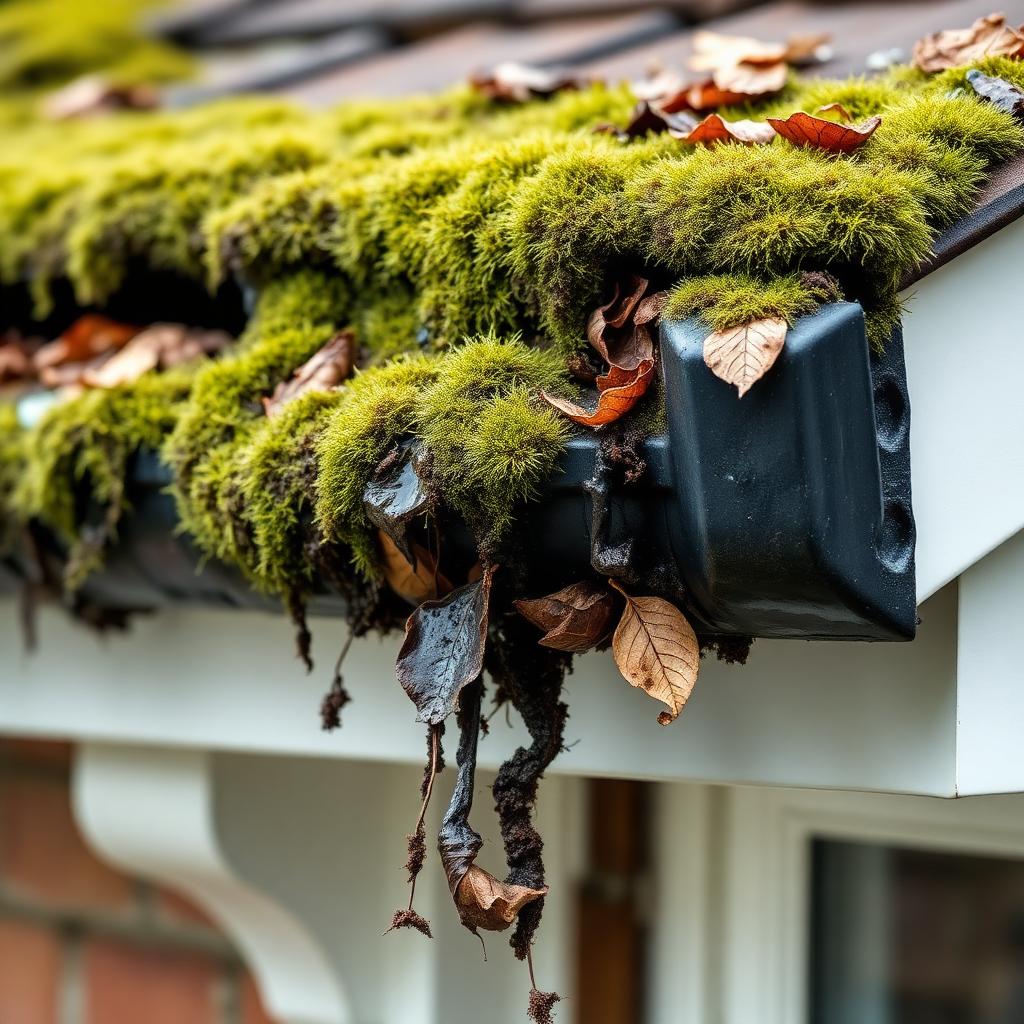
Roof cleaning in Nottingham isn't just about appearances. The East Midlands climate — long damp shoulder seasons, frequent freeze-thaw cycles and abundant mature tree cover across suburbs like Mapperley, Sherwood, Wollaton, West Bridgford and Beeston — creates the perfect conditions for moss, algae and lichen to take hold. Left untreated, organic growth lifts tile laps, blocks gutters and accelerates surface erosion on concrete tiles. The result is a roof that looks tired now and costs thousands more to replace prematurely.
This page is your complete 2026 guide to roof cleaning in Nottingham — written by local specialists, updated each year, and built around the questions Nottingham homeowners actually ask. We cover why roofs in this city develop biological growth, when cleaning is genuinely needed, what soft washing really involves, how much it should cost, and what to look out for when comparing quotes.
Why Nottingham roofs develop moss, algae and lichen
Nottingham sits in a moderate-rainfall band with cool damp shoulder seasons. Combined with mature tree cover throughout much of the city and a housing stock that includes a high proportion of 1960s–1990s concrete-tile properties, the conditions favour biological growth almost everywhere.
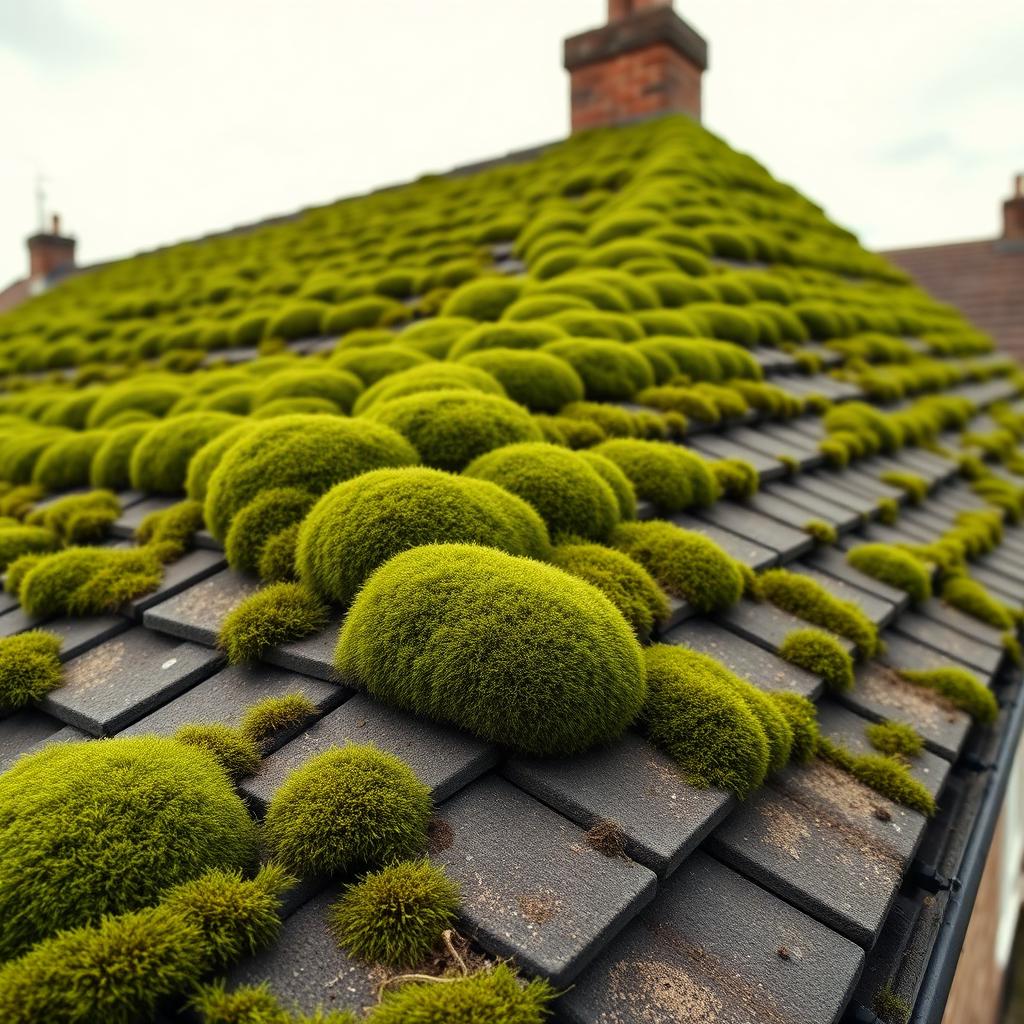
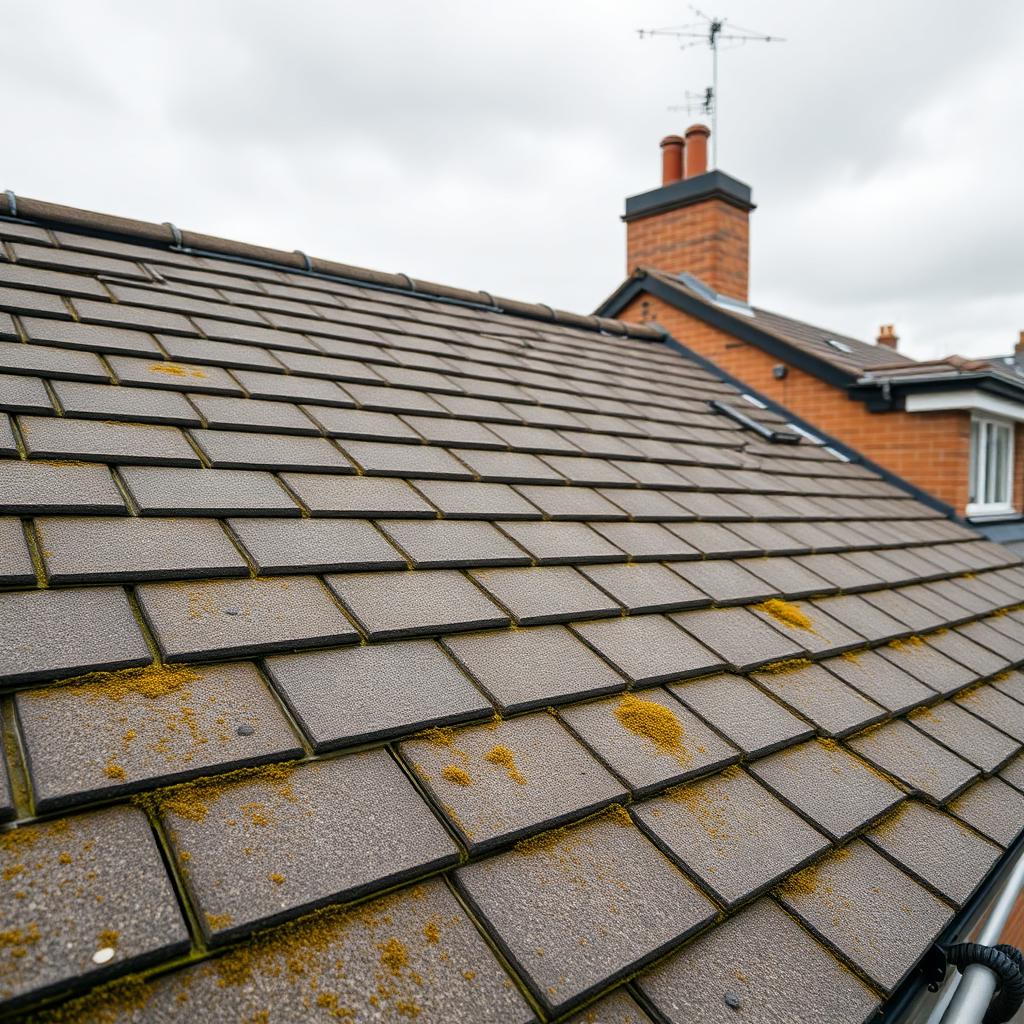
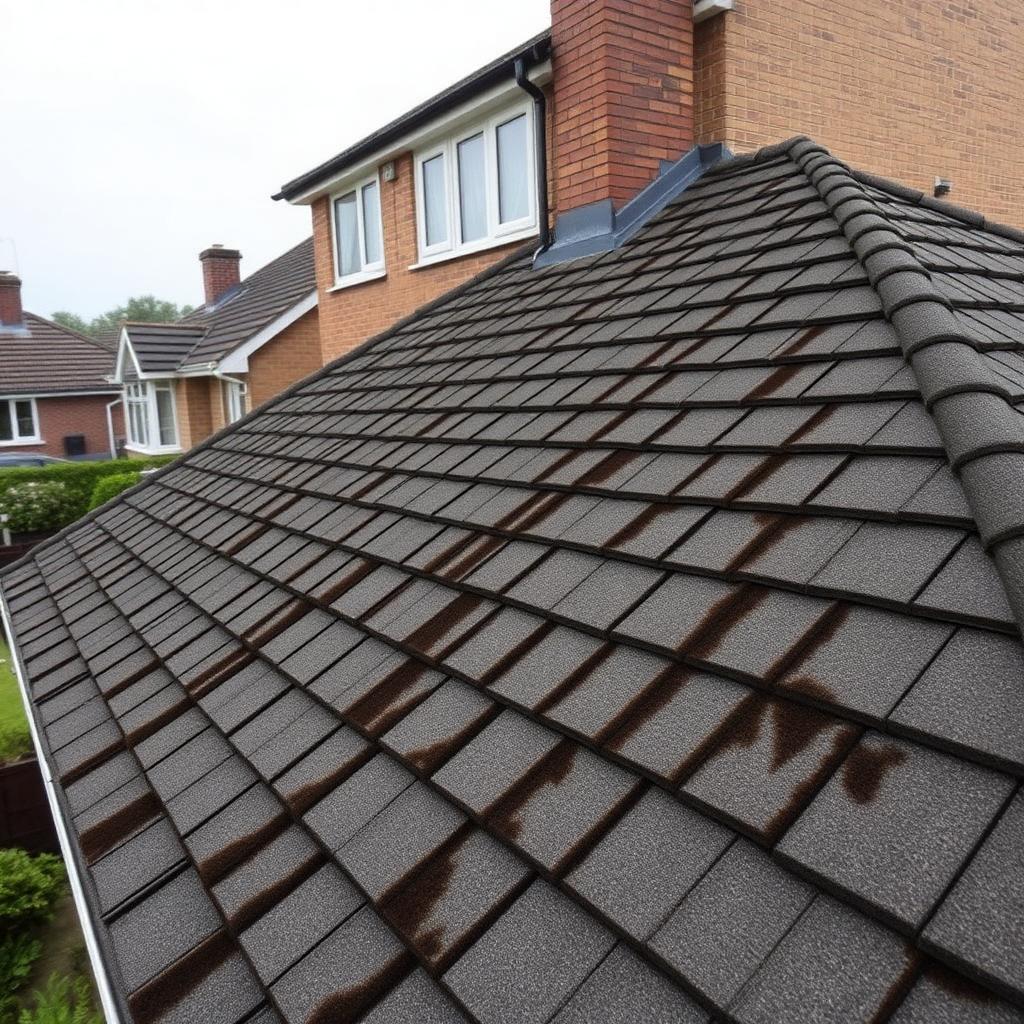
Moss spores (chiefly Bryum and Hypnum species) and gloeocapsa magma algae are airborne and ever-present. They settle on porous tile surfaces, and where moisture lingers — typically north-facing slopes and areas shaded by trees — they root into the grain of the tile and begin to spread. After 8–12 years on an un-treated concrete roof you'll often see green cushions of moss along the lower courses and tell-tale black streaks running down from ridges.
Soft wash vs pressure washing — the most important decision
The single most important decision in roof cleaning is the cleaning method. Get this wrong and you'll do more harm than good. The two main options are soft washing and pressure washing, and they're not interchangeable.
Soft washing — the default for most roofs
Soft washing uses water at pressures below 500 psi — roughly equivalent to a strong garden hose — combined with a roof-safe biocide. The cleaning power comes from the chemistry, not the water. Soft washing is safe for concrete tiles, clay tiles and most slate, including the aged Welsh slate found on Nottingham's Victorian terraces.
Pressure washing — appropriate only for certain surfaces
Pressure washing uses 1,500–3,000 psi. It's only safe on natural Welsh slate, dense quarry tiles and certain stonework. On concrete tiles it strips the cementitious surface coating, exposing porous aggregate that holds more moisture and grows moss back faster. If a contractor offers to pressure-wash your concrete-tile roof, that's a red flag — walk away.
What a full Nottingham roof clean includes — our 10-step process
A proper roof clean isn't a single-step job. It's a documented sequence — from inspection through soft wash and biocide to a written aftercare report. Here's a summary of the exact methodology we follow on every Nottingham job:
1Step 1
Free inspection & drone survey
Every job starts with a physical inspection — ground-level assessment plus drone imagery on any roof over 2 storeys or with restricted access. We photograph tile condition, ridge mortar, flashings, valleys and gutters, and note anything that will affect the clean. No obligation, no upsell pressure.
4Step 4
Site setup & protection
On arrival we sheet vulnerable planting, cover garden furniture, protect pathways and mask any nearby windows. Ladders, roof ladders or a MEWP are set up with proper anchoring. A pre-work walk-round photo record is taken.
5Step 5
Manual moss removal (top-down)
Working strictly top-down from the ridge, we remove bulk moss using profile-shaped scrapers matched to your tile. No wire brushes, no rotary tools, no high-pressure blasting on tile surfaces. Removed material is contained, not left to load the gutters uncontrollably.
7Step 7
Soft-wash biocide application
A roof-safe biocide is applied at under 500 psi across the entire roof surface, at the correct dilution for tile type and moss load. The biocide kills spores at the cellular level so growth doesn't return for 3–5 years, not just 12 months.
9Step 9
Site de-rig & final walk-round
Sheeting is removed, planting checked, pathways cleaned, gutters flushed one final time. We walk the perimeter with you (or via a video call if you're not on site) and confirm you're satisfied before mobilising.
10Step 10
Aftercare report & maintenance plan
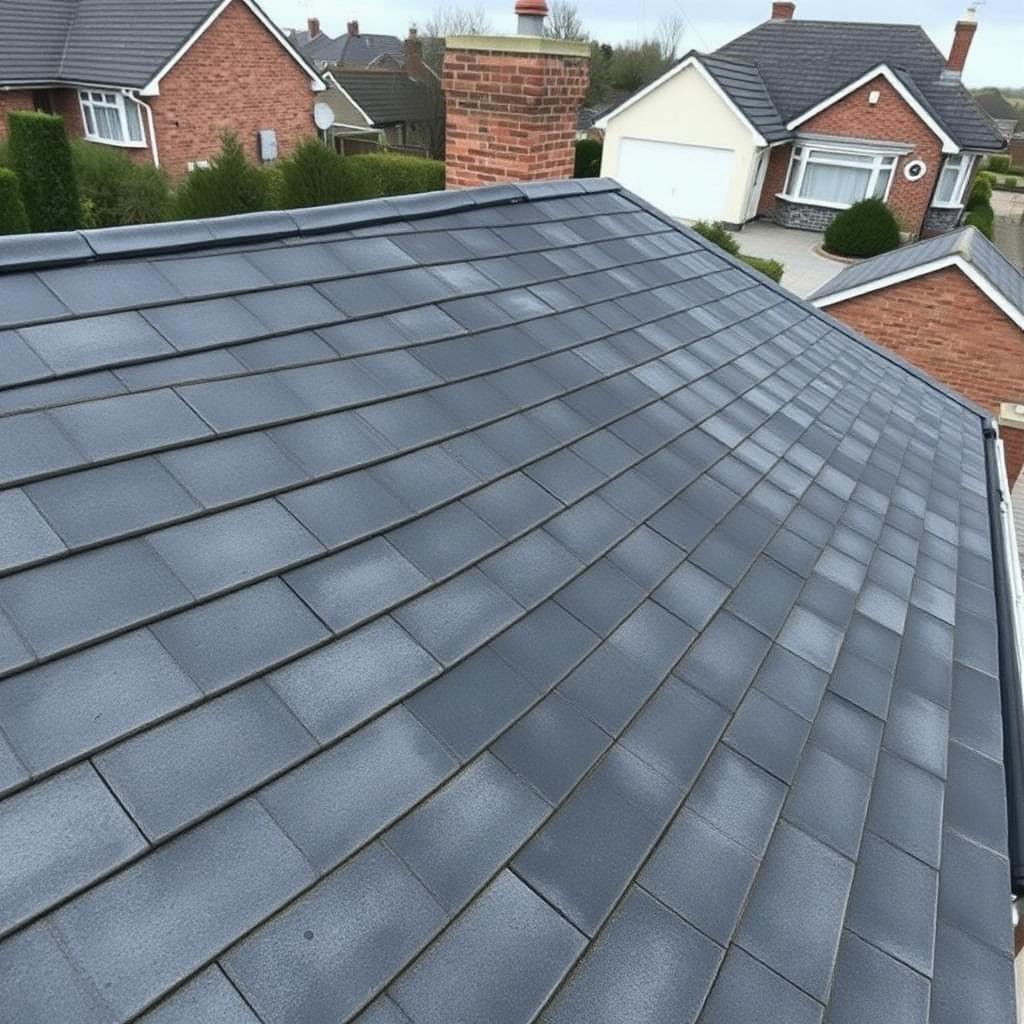
You receive a written aftercare report — before/after photos, biocide product used, treatment dates, and a maintenance schedule tailored to your property. We diarise a reminder for your next recommended treatment window.
Pricing depends on roof size, pitch, tile type, access difficulty and condition. The table below reflects honest 2026 Nottinghamshire market rates for a fully insured, professionally executed clean including biocide and gutter clearance.
Property type
Typical roof area
Soft wash + biocide
Full restoration
Mid-terrace (2-bed)
40–60 m²
£350–£500
£900–£1,400
Semi-detached (3-bed)
70–110 m²
£450–£750
£1,300–£2,000
Detached (4-bed)
110–160 m²
£650–£1,100
£1,800–£3,200
Bungalow
80–140 m²
£400–£800
£1,200–£2,400
Large detached / barn conversion
160 m² +
£1,100+
£3,000+
Indicative 2026 Nottinghamshire pricing. All quotes fixed in writing after inspection.
Roof lifespan — how cleaning protects your investment
A typical concrete-tile roof has a manufacturer-rated service life of 50–60 years. In practice, most UK roofs are replaced significantly earlier because of cumulative surface damage from untreated moss, ridge mortar failure and minor water ingress. Regular cleaning — every 4–6 years on most Nottingham properties — addresses all three issues for a fraction of replacement cost.
Real Nottingham results — before & after
Every clean we deliver produces a photographic record. Here are three recent Nottingham jobs covering the most common problems we're called to solve:
BeforeAfter
Semi-detached, Mapperley (NG3)
Heavy moss cushions on concrete tile
Twelve years without treatment left this north-facing slope smothered in moss. Manual scraping plus soft-wash biocide restored the tile in a single day.
The East Midlands isn't the wettest part of the UK, but it has one of the longest damp seasons. From late September through to April, surfaces rarely fully dry out for more than a few consecutive days. That sustained moisture is exactly what moss needs. Combine it with the city's tree-rich character — the parks, the lime-lined streets of West Bridgford, the wooded edges of Wollaton and Sherwood — and you have ideal conditions for biological growth.
Heritage stonework around the Park Estate, Victorian Welsh slate across the Arboretum, and concrete interlocking tiles dominating the outer suburbs all need different cleaning approaches. We tailor methodology to each property — there's no one-size-fits-all roof clean.
Areas we cover
We work across the whole of Nottingham and Nottinghamshire. Some of our most-served areas:
Clear gutters annually, ideally late autumn after leaf fall
Trim back overhanging branches where practical
Schedule a biocide top-up every 3–4 years
Consider copper or zinc ridge strips for long-term moss suppression
Re-inspect ridge mortar every 5 years
Frequently asked questions
How much does roof cleaning cost in Nottingham?+
For a typical 3-bedroom semi-detached property in Nottingham, a full soft wash with biocide treatment costs between £450 and £750. Larger detached homes start around £650 and reach £1,100+ for big roofs. Every quote is fixed in writing after a free inspection.
Is soft washing or pressure washing better for my roof?+
Soft washing is the right answer for around 90% of Nottingham roofs, including all concrete-tile properties. Pressure washing is only appropriate for natural Welsh slate or dense quarry tiles.
How long does roof cleaning last?+
A proper soft wash with biocide treatment keeps a Nottingham roof moss-free for 3–5 years. Fitting copper or zinc ridge strips extends that further.
Do you clean gutters as part of the service?+
Yes — full gutter and downpipe clearance is included with every roof clean, since loosened moss and debris naturally drop into the gutters.
Will roof cleaning damage my tiles?+
Not when done correctly. We use low-pressure soft wash chemistry that's safe for concrete, clay and slate. We never use rotary brushes or high-pressure jets on tile roofs.
Do you cover my area?+
We cover the whole of Nottingham and Nottinghamshire — every NG postcode plus border areas of Derbyshire and Leicestershire. See our Areas page for full coverage.
Credentials & assurance
Every clean is delivered under documented insurance, formal working-at-height training and manufacturer-recognised soft-wash methodology. Certificates available on request before booking.
Public liability
£5m cover with Zurich
Working-at-height
IPAF & PASMA certified
Method training
SoftWash UK accredited
Waste handling
Registered lower-tier carrier (EA)
Experience
12+ years, 3,000+ Nottinghamshire roofs
Guarantee
5-year biocide performance warranty
Written by
JW
James Whitmore
Founder & Lead Roof Technician, Nottingham Roof Cleaning
James has spent 12 years cleaning, inspecting and restoring roofs across Nottinghamshire. Formally trained in soft-wash methodology, IPAF-certified for powered access, and a working member of the UK Roof Cleaning Association. He personally inspects the majority of jobs the company quotes.